Prof François H Nosten
| Research Area: | Global Health |
|---|---|
| Scientific Themes: | Tropical Medicine & Global Health |
| Keywords: | malaria, pregnancy, HIV, AIDS and drug resistance |
| Web Links: |
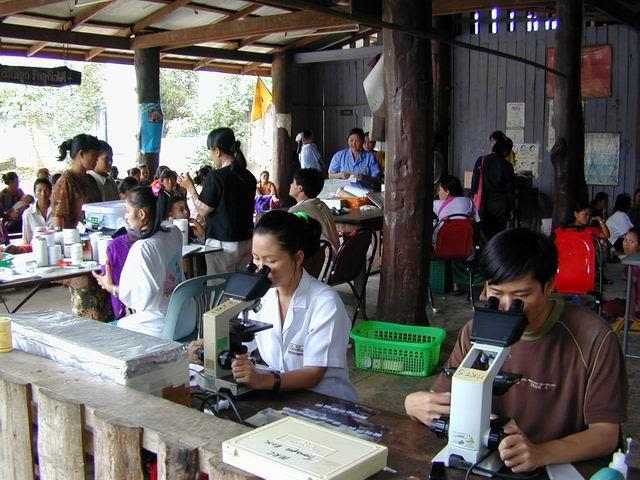
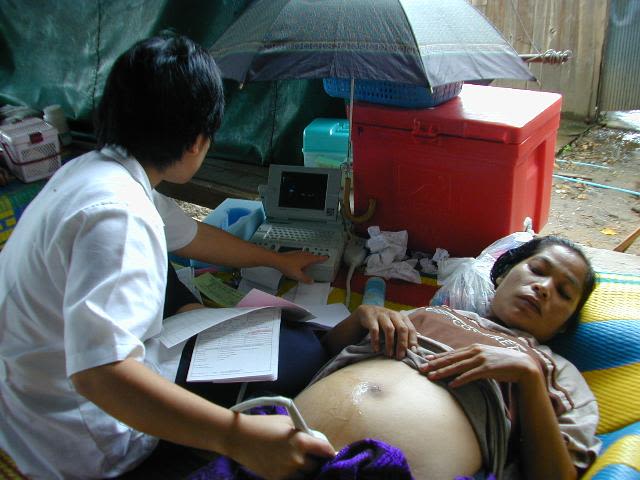
Dr Nosten’s work concentrates on uncomplicated malaria and he has conducted the largest ever drug trials in malaria in an area which has the world’s most drug-resistant parasites, including a detailed study of the SPf66 malaria vaccine. Recent studies have concentrated on the efficacy and effectiveness of combination anti malarial therapy. Dr Nosten has also investigated malaria prophylaxis and antimalarial treatment in pregnancy and the identification of thiamine deficiency (beri-beri) as a major cause of infant mortality amongst Karen refugees.
| Name | Department | Institution | Country |
|---|---|---|---|
| Prof Richard Price | Tropical Medicine | Oxford University | UK |
| Tim ANDERSON | Southwest Foundation Texas | USA | |
| Laurent RENIA | Singapore Immunology Network | Singapore |
2004. Intercontinental spread of pyrimethamine-resistant malaria. Science, 305 (5687), pp. 1124. Read abstract | Read more
Here we present molecular evidence demonstrating that malaria parasites bearing high-level pyrimethamine resistance originally arrived in Africa from southeast Asia. The resistance alleles carried by these migrants are now spreading across Africa at an alarming rate, signaling the end of affordable malaria treatment and presenting sub-Saharan Africa with a public health crisis. Hide abstract
2002. Treatment of uncomplicated multidrug-resistant falciparum malaria with artesunate-atovaquone-proguanil. Clin Infect Dis, 35 (12), pp. 1498-1504. Read abstract | Read more
In an open-label trial carried out on the northwest border of Thailand, 1596 patients with uncomplicated multidrug-resistant falciparum malaria were randomly assigned to receive atovaquone-proguanil, atovaquone-proguanil-artesunate, or artesunate-mefloquine and were followed up for 42 days. All 3 regimens were highly effective and well tolerated. Fever duration and parasite clearance times were significantly shorter among patients who received artesunate (P<.001). Polymerase chain reaction genotyping confirmed that recrudescence occurred in 13 patients who received artesunate-mefloquine (2.4%), 5 who received atovaquone-proguanil-artesunate (0.9%), and 15 who received atovaquone-proguanil (2.8%). Adding artesunate to atovaquone-proguanil reduced the risk of failure 3-fold (95% confidence interval [CI], 1.1-8.2) and subsequent gametocyte carriage 21-fold (95% CI, 14-30). Gastrointestinal complaints in the first 48 h after initiation of treatment were more common among artesunate recipients, but after day 2, dizziness, sleep disturbance, nausea, vomiting, and anorexia were more common among mefloquine recipients (P< or =.014). Artesunate-atovaquone-proguanil is a highly effective and well-tolerated treatment for multidrug-resistant falciparum malaria. Hide abstract
2002. Combination therapy for malaria: the way forward? Drugs, 62 (9), pp. 1315-1329. Read abstract | Read more
Unless new strategies are deployed to combat malaria, the already enormous health and economic burden related to the disease in tropical countries is bound to worsen. The main obstacle to malaria control is the emergence of drug resistant strains of Plasmodium falciparum. As for HIV/AIDS and tuberculosis, the use of combinations of antimalarial drugs reduces the risk of selecting for resistant mutants of the plasmodial parasites. In large field trials, the combination of an artemisinin derivative and a partner drug with an unrelated mode of action (in this case mefloquine), has shown a remarkable double effect: preventing the emergence and spread of drug resistance, and interrupting the transmission of P. falciparum. This has opened the way for a new approach to the deployment of antimalarial drugs. Coupled with early detection and confirmed diagnosis, this strategy represents the only way forward in the chemotherapy of malaria. Massive economic assistance will be needed to detect and treat adequately the estimated 500 million cases of malaria per year, but without radical action there is no prospect of 'Rolling Back' malaria. Hide abstract
2000. Effects of artesunate-mefloquine combination on incidence of Plasmodium falciparum malaria and mefloquine resistance in western Thailand: a prospective study. Lancet, 356 (9226), pp. 297-302. Read abstract | Read more
Worsening drug resistance in Plasmodium falciparum malaria is a major threat to health in tropical countries. We did a prospective study of malaria incidence and treatment in an area of highly multidrug-resistant P. falciparum malaria. Hide abstract
1999. Effects of Plasmodium vivax malaria in pregnancy. Lancet, 354 (9178), pp. 546-549. Read abstract | Read more
Plasmodium vivax is more common than P. falciparum as a cause of malaria in many parts of the tropics outside Africa. P. falciparum infection has harmful effects in pregnancy, but the effects of P. vivax have not been characterised. We investigated the effects of P. vivax infection during pregnancy. Hide abstract
1998. Maternal antibodies block malaria. Nature, 395 (6705), pp. 851-852. | Read more
Development of novel approaches to model large series of heterogenous pharmacological data
Clinical Pharmacology is essential to ensure optimal dosing with currently available and newly introduced antimalarial drugs. This requires two key questions to be answered: Firstly, what drug exposure (concentrations over time) is necessary to ensure the required therapeutic effect? Secondly, do dosing recommendations need to be modified in important target populations including infants, pregnant women, and those with prevalent co-morbid diseases (especially HIV/AIDS, malnutrition) to ensure ...
Molecular-dynamic correlates of oxidant haemolysis in glucose-6-phosphate dehydrogenase (G6PD) deficiency
Glucose -6-phosphate dehydrogenase (G6PD) deficiency, the most common human enzyme deficiency (>180 different genotypes), affects approximately 400 million people worldwide (1). Deficiency reduces production of NADPH, and lowers intraerythrocytic stores of reduced glutathione –a major defence against oxidant damage. Oxidant drugs and foods cause haemolysis in G6PD deficiency, which can be severe. Enzyme deficiency protects against severe malaria and so the abnormality is prevalent mainly in ...